29 ธันวาคม 2568
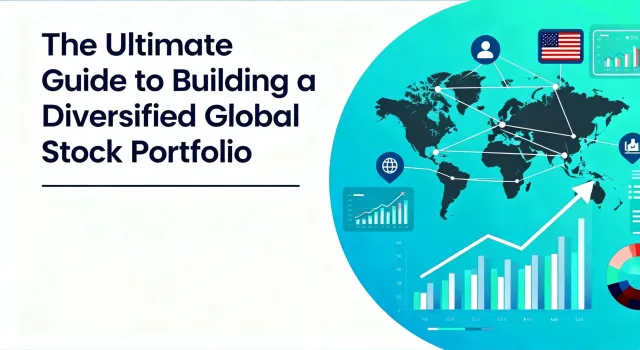
The Ultimate Guide to Building a Diversified Global Stock Portfolio
A diversified global stock portfolio spreads your equity exposure across countries, sectors, and company types to reduce single-market risk while capturing broader sources of return. By investing globally, you mitigate home-country shocks, smooth volatility, and participate in growth cycles that don’t move in lockstep.
Institutional research consistently supports international diversification. Vanguard’s framework for globally diversified portfolios illustrates that combining U.S., developed ex-U.S., and emerging markets enhances risk-adjusted outcomes and counters common home bias tendencies that overweight local assets. Complementary guidance from Vanguard on the power of diversification confirms this conclusion for investors engaging in global multi-market investments. Together, these insights advocate for building a global stock portfolio with intentional international diversification.
Setting Investment Goals and Constraints
Clear goals and constraints anchor your global strategy. Define measurable objectives (such as retirement income or long-term capital growth), your time horizon, liquidity needs, tax status, and the drawdown you can realistically tolerate. Behavioral capacity matters as much as risk tolerance; staying invested through turbulence is essential, as highlighted in J.P. Morgan private bank case studies on resilient portfolios.
Use a quick planning snapshot to keep decisions aligned:
Establishing Strategic Asset Allocation
Strategic asset allocation sets your long-run mix across stocks, bonds, and alternatives to balance growth with downside resilience. A market-cap–weighted global baseline (for instance, 50% global equities and 50% bonds) is a sensible starting point, consistent with Vanguard’s framework for globally diversified portfolios.
Below are common models and where they fit:
Evidence shows fees and allocation dominate long-run outcomes; keeping costs low meaningfully improves net returns. For additional context, see Russell global balanced portfolio for institutional allocations.
Choosing Investment Vehicles for Global Exposure
Investment vehicles are the instruments used to access markets: mutual funds, ETFs, index funds, tokenized securities, or direct stocks. For most investors, low-cost, broad-market index funds and ETFs deliver the best combination of diversification, liquidity, and cost control—fee drag compounds over time, eroding returns. Tokenized assets can further reduce frictions and enhance access via blockchain technology.
Constructing a Diversified Equity Portfolio
Diversifying across regions, sectors, and styles dampens country-specific and sector-specific drawdowns. Broad global equity index funds or tokenized equivalents deliver efficient breadth while allowing targeted tilts. Research suggests diversification reduces risk without materially sacrificing returns when implemented thoughtfully.
Geographic Diversification
Geographic diversification spreads equity exposure among the U.S., developed ex-U.S., and emerging markets to reduce home-country reliance. Investors often exhibit home bias—overweighting local assets relative to global market weights—potentially missing global growth.
Practical pathways:
Market-cap weight: Allocate in proportion to global market size (e.g., U.S., developed ex-U.S., emerging).
Intentional tilts: Overweight regions with structural tailwinds or valuation discounts.
Sector-led allocations: Use regional ETFs to balance sector concentrations (e.g., U.S. tech vs. international financials/industrials).
Benchmarks include the S&P 500, MSCI ACWI ex USA, and MSCI Emerging Markets for scalable implementation aligned with global market structure.
Sector and Style Diversification
Sector diversification spreads exposure across industries such as technology, healthcare, energy, and financials. Investment style diversification blends factors like growth, value, quality, size, and low-volatility. History shows concentration hurts: during the dot-com bust, tech-heavy portfolios fell far more than well-diversified ones. Modest allocations to value or low-volatility can balance large-cap growth dominance, a tilt consistent with Goldman Sachs outlook on building robust portfolios.
Indicative resilience across crises:
Integrating Non-Equity Assets for Risk Management
Non-equity assets include bonds, real estate, commodities, and alternative strategies that diversify equity risk. They historically cushion stock selloffs and can improve portfolio Sharpe ratios. In 2008, high-quality bonds rallied as stocks plunged, softening portfolio damage for balanced investors. Typical diversified portfolios hold 20–50% in non-equities depending on goals and risk tolerance.
Fixed Income and Bonds
Fixed income comprises government, corporate, and municipal bonds that pay periodic interest and return principal at maturity. Diversify across issuers and maturities to manage credit and duration risk. Bonds have historically added resilience in crises, stabilizing mixed portfolios.
Sample bond mixes:
Conservative: 70% government, 20% investment-grade corporate, 10% short-term/munis
Moderate: 50% government, 30% investment-grade corporate, 20% short/intermediate
Adventurous income: 40% government, 40% corporate (incl. some HY), 20% short/intermediate
Real Estate Investment Trusts and Alternatives
REITs are publicly traded vehicles owning income-producing real estate. Alternative assets include strategies or exposures with low correlation to core stocks/bonds (e.g., hedge strategies, infrastructure). Adding 5–15% to real assets or alternatives can enhance diversification and inflation sensitivity, especially when equities and bonds struggle simultaneously. Tokenized real estate can lower minimums and improve accessibility.
Commodities and Private Markets
Commodities (such as gold, energy, and industrial metals) and private markets (private equity, private credit) provide additional diversification and potential inflation hedging. Strategic allocations to commodities and alternatives can strengthen long-term portfolio resilience across regimes. Access via diversified commodity ETFs, listed private-market feeders, or compliant tokenized offerings where available.
Leveraging Tokenized Stocks and Blockchain Technology
Tokenized stocks are traditional securities represented as digital tokens on a blockchain, enabling fractional ownership, transparent settlement, and around-the-clock transferability. This structure can reduce intermediaries and costs while improving access. ToVest leverages tokenization to democratize U.S. equities and real estate with lower minimums, enhanced liquidity, and faster settlement, including stablecoin support for borderless trade and streamlined, real-time analytics via our Academy on tokenized investing.
Multi-Currency Support and Managing Currency Risk
Multi-currency support allows you to hold, fund, and trade in multiple currencies (including stablecoins), reducing frictions and potential conversion costs. Currency risk is the impact of exchange-rate moves on foreign asset returns; it can amplify or dampen performance.
Platforms like ToVest enable fiat or crypto rails, helping you diversify funding and reduce local-currency concentration. Consider hedging when currency swings threaten near-term goals or liabilities. For example:
Platforms and Apps for Global Stock Investing
Global stock investing platforms provide access to international markets, multi-currency funding, fractional shares, and robust security. Compare fees, market reach, multi-currency features, and custody. ToVest adds a blockchain-powered layer for tokenized equities and real estate with crypto settlement and real-time transparency.
Look for:
Broad market access (U.S., developed, emerging)
Fractional investing and low minimums
Competitive pricing and FX rates
Multi-currency balances and hedging tools
Strong security, investor protections, and clear disclosures
ToVest: Tokenized Stock Platform with Multi-Currency and Crypto Support
ToVest enables global investors to buy fractional shares of U.S. stocks and real estate using fiat or stablecoins, combining multi-currency accounts, fast settlement, and blockchain-based transparency. Integrated analytics, portfolio insights, and guardrails support disciplined, cross-border diversification—all with cost-efficiency and regulatory safeguards designed for global users.
Other Leading Global Investing Apps with Multi-Currency Features
Several established brokers and apps offer deep international access with multi-currency capabilities and competitive FX. Interactive Brokers delivers extensive market coverage and multi-currency balances. For broader comparisons, see best brokers for international trading and Investopedia’s best online brokers. Many mainstream apps have also improved usability and features.
Platforms Allowing Global Stock Investment via Cryptocurrency
Crypto-enabled investing typically works in two ways: using crypto (often stablecoins) for funding and settlement at a broker or acquiring tokenized stock exposures directly on compliant platforms. The appeal is faster, lower-friction cross-border transactions and fractional access. ToVest supports stablecoin funding and tokenized equities under a compliant framework. Interactive Brokers integrates regulated crypto trading alongside global markets, aiding a unified workflow. Popular crypto apps facilitate digital asset funding rails, though they may not offer equities directly . Investors should assess regulatory posture, custody, and disclosure when using tokenized or crypto-funded routes.
Comparison of onboarding and settlement:
Portfolio Monitoring, Rebalancing, and Stress Testing
Portfolio rebalancing is the systematic process of restoring target weights after market moves. Stress testing simulates adverse scenarios (e.g., recessions, rate shocks) to gauge resilience and refine allocations. A disciplined schedule—calendar-based (e.g., annually) or threshold-based (e.g., 20% drift)—anchors risk management, supported by evidence that rules-based rebalancing improves consistency. ToVest’s analytics and benchmarking help you visualize exposures, drifts, and factor tilts in real time.
A simple workflow:
Review objectives, constraints, and cash flows quarterly.
Check allocations and drift vs. targets; rebalance if thresholds are breached.
Run stress tests across rate, inflation, credit, and equity-shock scenarios.
Evaluate fees, FX costs, and taxes; seek reductions where possible.
Document changes; avoid ad-hoc shifts driven by headlines.
Practical Examples of Global Portfolio Models
Below are reference models used by practitioners and institutions. Use them as a starting point, then tailor to your goals and risk capacity.
Many endowments and multi-asset funds adopt similar diversification, utilizing private markets, real estate, and alternatives to dampen equity reliance, as illustrated in J.P. Morgan private bank case studies.
Common Risks and Implementation Challenges
Expect and plan for real-world frictions: currency volatility, political instability, regulatory and tax complexity, and the persistent pull of home bias. Define each risk, set limits, and implement mitigants—from currency hedges to regional caps—before markets stress-test your plan. Diversification research shows portfolios that spread risks are more likely to maintain return targets through stress without excessive drawdowns.
Currency and Political Risks
Currency risk is the impact of exchange-rate moves on returns; political risk arises from policy shifts, capital controls, or geopolitical shocks. Use diversified country exposure, prudent hedging, and multi-currency platforms to manage these risks, supported by both academic guidance and practitioner case studies.
Regulatory and Tax Considerations
Withholding tax is tax taken at source on dividends; capital gains tax applies to profits from sales; regulatory risk involves rule changes that affect access or costs. Understand reporting requirements for foreign income, local restrictions, and broker documentation. Platforms with cross-border support and clear tax reporting can simplify compliance.
Avoiding Over-Concentration and Behavioral Pitfalls
Over-concentration is excessive exposure to one country, sector, or style; behavioral pitfalls include performance chasing and panic selling. Evidence on home bias and diversification underscores the need for guardrails.
Common mistakes to avoid:
Overweighting home market beyond global cap weights
Chasing last year’s winners; abandoning a sound plan after losses
Ignoring currency, sector, or factor concentration
Letting fees, FX, and taxes compound unchecked
Skipping rebalancing or stress testing
A quick checklist:
Target weights documented? Drift thresholds set?
FX policy (hedged/unhedged) defined by goal horizon?
Sector/style exposures reviewed quarterly?
Costs (expense ratios, FX, commissions) monitored?
Behavior plan: rules for add/reduce during volatility?
Frequently Asked Questions
What is a diversified global stock portfolio and why is it important?
A diversified global stock portfolio holds equities across many countries and sectors to reduce reliance on any single market while improving the odds of steadier, long-term growth.
How should I determine my asset allocation based on risk tolerance and time horizon?
Match your mix to your goals, ability to endure drawdowns, and time horizon; younger investors often favor higher equity weights, while shorter horizons call for more bonds and cash.
What percentage of my portfolio should be allocated to U.S., international, and emerging markets?
Start with global market-cap weights and adjust for your risk tolerance, income needs, and local economic exposure.
How often should I rebalance my global portfolio?
Rebalance annually or when allocations drift materially from targets to keep risk aligned with your plan.
Should I include alternative assets like real estate or crypto in my global stock portfolio?
A modest allocation to alternatives such as real estate or crypto can add diversification if sized prudently and aligned with your risk profile.