2026年1月26日

How to Trade Fractional US Stocks Without High Fees

Investing in US blue chips shouldn’t require a big bankroll or high fees. Fractional shares let you buy a portion of a stock or ETF by dollar amount, enabling you to start with as little as $1 while still receiving proportional gains, losses, and dividends. To trade fractional US stocks without high fees, choose a platform with zero commissions, transparent pricing, and global funding options; use dollar-based or recurring orders for discipline; and watch for hidden costs like currency conversion. ToVest adds a modern twist for global investors with seamless onboarding, instant settlement, and 24/7 access to tokenized US equities and real assets—removing geographic and market-hour friction. Below, we break down how fractional investing works, where to trade, typical minimums, and smart tactics to keep costs down. Understanding Fractional US Stocks Fractional shares allow you to own less than one full share of a stock or ETF, so you can invest by dollars rather than whole shares—useful for high-priced stocks and diversified portfolios. In practice, your platform aggregates orders, buys full shares, and allocates fractions to each investor; you receive proportional gains, losses, and dividends over time, and many brokers support automatic dividend reinvestment via DRIP programs that also operate fractionally. For a clear primer on mechanics and use cases, see this fractional shares definition from Investopedia and a product-level explainer in the Firstrade fractional shares guide. Fractional investing typically relies on dollar-based orders, allowing you to specify “$20 of stock X” instead of “1 share of X.” This makes consistent, small purchases feasible for global investors building exposure to high-priced stocks. Choosing the Right Platform for Global Investors Global investors should prioritize platforms with broad onboarding coverage, reliable execution, and fair, transparent fees—plus the ability to fund and convert currencies efficiently. Platforms Supporting Fractional US Stock Trading Worldwide A wide range of brokers now support fractional shares, including Fidelity, Interactive Brokers, Webull, Robinhood, SoFi, Firstrade, and Charles Schwab, though availability and onboarding vary by country. NerdWallet’s broker comparison highlights key differences across providers, including fee tiers and eligible securities, and notes that Schwab’s “Stock Slices” focuses on S&P 500 names with a $5 minimum. Interactive Brokers’ fractional program covers more than 10,500 US stocks and ETFs, offering especially broad coverage for global accounts, as detailed in Interactive Brokers’ fractional trading overview. Where ToVest stands apart is in its infrastructure: global onboarding, real-time data, 24/7 trading, instant settlement, and support for tokenized assets on a secure, transparent ledger—eliminating the dependence on US market hours and regional account restrictions. For an overview of the platform’s approach, see ToVest’s about page. Key Features to Look for in a Fractional Trading Platform Global onboarding and easy funding in your local currency Broad asset coverage (US stocks, ETFs—and ideally real estate or other alternatives) True dollar-based orders with minimal minimums Transparent, low fees and clear FX conversion policies Strong security (2FA, custody, cold storage for tokenized assets) Responsive support and robust execution tools Comparison snapshot: Note: Eligibility, onboarding, and trading hours vary by country and account type—confirm details with your provider. Minimizing Fees When Trading Fractional Shares The headline price may be “$0 commission,” but total cost includes FX, spreads, and potential platform-specific charges. Here’s how to keep more of your returns. Commission-Free and Low-Cost Trading Options Several leading platforms offer commission-free trading on US stocks and ETFs, including Fidelity, Interactive Brokers (IBKR Lite), Webull, Robinhood, SoFi, and Firstrade—see NerdWallet’s broker roundup for the latest overview. Minimum order sizes are typically low: Fidelity allows $1 dollar-based trades per its fractional shares page; Webull supports $1 or 1/100,000th of a share in its fractional FAQ; Robinhood permits fractions as small as one-millionth of a share; Schwab’s Stock Slices start at $5; SoFi and Firstrade also commonly use $5 minimums. Yahoo Finance’s fractional broker comparison consolidates many of these thresholds. Commission-free trading means your broker doesn’t charge a per-trade commission on buys and sells. You may still face other costs (see below). Avoiding Hidden and Per-Transaction Fees Even on commission-free platforms, costs can show up elsewhere. Some providers charge small clearing fees for fractional orders—for example, Tastytrade lists $0.10 per fractional trade with a $5 minimum purchase in third-party comparisons. Currency conversion for non-USD accounts, margin interest, wire/funding fees, and options contract fees can also add up; NerdWallet’s broker comparison is a helpful checklist when reviewing fee schedules. Watch for: Per-trade clearing or regulatory fees on fractional orders DRIP or dividend-handling fees Wide spreads or execution markups Foreign exchange conversion and funding fees Account, withdrawal, or inactivity fees Using Recurring and Basket Orders to Reduce Costs Recurring orders automate periodic, dollar-based purchases—useful for dollar-cost averaging while minimizing manual trades. Basket orders let you buy small amounts of multiple stocks at once, which can reduce per-trade overhead where a platform charges per order rather than per basket. Many brokers also support dividend reinvestment into fractional shares, helping you compound automatically, as noted in Firstrade’s fractional shares program. Minimum Investment Requirements for Fractional Shares Most platforms set low dollar minimums for fractional orders, lowering the barrier to entry regardless of your starting budget. Typical Minimum Order Sizes Across Platforms Security eligibility for fractional trading varies by broker and may differ between stocks and ETFs—check the provider’s eligible asset lists. ToVest emphasizes ultra-low minimums and broad fractional access to help global investors onboard quickly and build diversified positions incrementally. How Dollar-Based Investing Works Dollar-based investing lets you buy by amount (e.g., $10) rather than by share count, enabling small, steady contributions. Behind the scenes, brokers pool customer orders to purchase round lots and then allocate pro-rata fractions to each account; dividends and corporate actions are handled proportionally. Fidelity’s fractional shares explainer details how dollar-based orders work in practice, while Interactive Brokers outlines how its system enables fractions across thousands of US securities. Best Practices for Trading Fractional US Stocks Use thoughtful order types, track non-fee costs, and plan your exits to keep more of what you earn. Using Limit Orders and Managing Execution Quality Market orders fill at the best available price right now; limit orders set a maximum buy price or minimum sell price for greater control. When supported for fractional trades, limit orders can reduce slippage and improve realized prices. Execution quality can vary when orders are aggregated or internalized by brokers or routed through liquidity providers; research on tiny trades suggests microstructure can influence outcomes during fragmented or off-exchange fills, as discussed in the Tiny Trades paper on microstructure.exchange. Monitoring Non-Fee Costs and Trade Mechanics Beyond commissions, factor in: FX conversion costs for non-USD funding Margin interest and options contract fees Spreads and any potential price improvement (or lack thereof) Dividend handling and DRIP mechanics Tax recordkeeping for many small tax lots NerdWallet’s broker comparison and fee disclosures provide a good baseline for evaluating total cost, including global account nuances. Planning Your Investment Exit Strategy Selling fractional shares usually works like buying: your broker aggregates and executes, then allocates proceeds to your account. During corporate actions, you may receive cash-in-lieu for residual fractions; stock splits and mergers can create partial positions that are settled in cash. Investopedia’s overview of fractional shares explains typical treatment in splits and corporate events; always review your platform’s policies for fractional sell orders and corporate actions before you trade. Frequently Asked Questions What Are Fractional Shares and How Do They Work? Fractional shares let you buy and own a portion of a single stock or ETF by dollar amount; gains, losses, and dividends are allocated proportionally to your fraction. Which Platforms Allow Commission-Free Fractional Stock Trading? Fidelity, Interactive Brokers (IBKR Lite), Webull, Robinhood, SoFi, and Firstrade all support commission-free fractional trading on US stocks and ETFs; confirm eligible securities and minimums with each. What Is the Minimum Investment Needed for Fractional US Stocks? Many brokers allow you to start at $1, while others use $5 minimums or fractions as small as one-millionth of a share, depending on the platform. Are There Any Hidden Fees When Trading Fractional Shares? Yes—watch for clearing fees, FX conversion, margin interest, and account charges that can apply even when base commissions are $0. Can I Reinvest Dividends Using Fractional Shares? Yes; many platforms, including ToVest, offer dividend reinvestment plans that automatically buy fractional shares to help your money compound.

blog banner

2026年1月5日

2026 Guide: Why International Investors Need Tokenized Stock Platforms Now

Introduction to Tokenized Stock Platforms Tokenized stocks are digital representations of ownership rights in real-world equities recorded on a blockchain. Instead of buying a whole share through a traditional broker, investors can hold blockchain-based tokens that mirror the economic rights of equities, enabling fractional ownership, automated actions, and global investor access. In practice, tokenized stock platforms, such as ToVest, make real-world assets (such as U.S. equities) tradable as on-chain tokens, with pricing, custody, and compliance coordinated between regulated partners and smart contracts. Clear rules of the road and more robust market rails now make these platforms practical for cross-border investing in 2026, as infrastructure providers, issuers, and custodians have matured beyond early pilots into production-grade systems. For foundational mechanics and benefits, see CoinGecko’s explanation of what tokenized stocks are and how they function, including liquidity, transparency, and programmability in blockchain stocks trading. Market Maturity Driving Tokenized Stock Adoption In 2026, tokenized stocks are shifting from niche experiments to a mainstream option as market plumbing and institutional participation deepen. Coverage in 2025 already framed tokenized stocks as a fast-forming market with expanding venues, better liquidity, and tighter links to traditional finance. Meanwhile, the broader tokenization trend has moved beyond crypto-native startups: large asset managers, banks, and infrastructure providers are building and piloting offerings, bringing credibility, standardized processes, and deeper secondary markets. For international users, this institutional normalization reduces first-mover risk and improves access, execution quality, and post-trade support. Key milestones in market maturity Payment rails, stablecoins, and KYC-integrated wallets become standard Enables faster cross-border settlement with institutional-grade controls Benefits of Tokenized Stocks for International Investors Tokenized stock platforms offer practical, measurable advantages to non-U.S. investors seeking efficient exposure to U.S. equities and other assets: Fractional ownership reduces minimums, allowing small-ticket participation in high-priced shares and baskets while preserving economic exposure. 24/7 markets and smart contracts compress settlement cycles from days to near real-time, with automated compliance, distributions, and corporate actions. Global reach comes from programmable compliance that enables cross-border access under jurisdiction-specific rulesets, broadening participation beyond local brokerages. Diversification extends beyond listed stocks into real-world asset tokenization such as private credit, infrastructure, and real estate, widening portfolio options. Traditional vs. tokenized access (typical ranges) Blockchain Infrastructure Supporting Tokenized Stock Trading Blockchain infrastructure is the stack of distributed ledger networks and services that record ownership, enforce rules, route orders, settle trades, and manage lifecycle events for tokenized assets in a secure, tamper-evident, and transparent manner. Leading execution and issuance ecosystems today include Ethereum, BNB Chain, and Solana, while services like Chainlink oracles, identity/compliance modules, and tokenization middleware connect on-chain assets to real-world data and regulations . Security and transparency are strengthened by on-chain records and auditability, which reduce reconciliation overhead and provide real-time traceability for positions and transfers. ToVest’s stack is built for international users. It features ultra-low latency matching, real-time analytics, embedded risk controls, and seamless fiat and stablecoin rails. It supports direct wallet connectivity alongside custodial accounts, enabling flexible settlement workflows without compromising compliance. Learn how ToVest integrates performance and security across cross-border flows on our About page. Regulatory Progress and Challenges in Cross-Border Tokenized Trading Regulatory harmonization refers to aligning rules across jurisdictions to enable seamless issuance, trading, and settlement. Fragmentation describes inconsistent or conflicting requirements that create frictions in KYC/AML, investor protections, disclosures, and taxation. In practice, cross-border regulation remains a core challenge; investor protections, tax treatment, and licensing differ widely, demanding careful platform design and disclosures. Despite challenges, long-run forecasts are significant: Boston Consulting Group has outlined a scenario where tokenized assets could reach into the tens of trillions by 2030, reflecting mainstream adoption across asset classes (American Century Investments). In the U.S., exemptions like Reg D, Reg A+, and Reg CF provide frameworks for compliant distribution to different investor segments, often paired with transfer restrictions encoded at the token level. Checklist for international investors Look for programmable compliance supporting your jurisdiction and investor category. Prefer platforms with regulated custodians and clear segregation of client assets. Verify stablecoin and fiat on/off-ramp partners and settlement venues. Assess disclosures on price oracles, corporate actions, and redemption mechanics. Review incident response, audit practices, and transparency of on-chain records. Payment Rails and Crypto Wallets in Tokenized Stock Trading Payment rails are the systems and protocols that move funds between parties—bank transfers, card networks, instant payment schemes, and on-chain rails including stablecoins. For tokenized stocks, robust fiat on/off-ramps and high-quality stablecoins enable predictable liquidity, faster settlement, and lower counterparty risk, particularly across borders. Many platforms support direct wallet trading, letting users fund with stablecoins or fiat, pass KYC/AML checks, and settle on-chain. Wallet compatibility, recovery options, and transaction signing policies are critical for security and compliance. ToVest integrates both self-custodial and custodial flows, with programmable settlement and safeguards tuned for international users. Wallet-based tokenized stock trading: typical steps Institutional Interest and Market Integration Trends Institutional activity signals confidence and durable market structure. BlackRock’s tokenized fund initiatives and bank pilots in tokenized equities and treasuries demonstrate that blue-chip players are now building on public chains with institutional controls. Even with rapid growth, tokenized assets still represent a tiny fraction of global equity and bond markets, underscoring how early the adoption curve remains—yet the trajectory is steep as liquidity, risk management, and compliance capabilities improve. Established infrastructure players are also bridging TradFi and blockchain through connectivity to clearing, custody, and compliance stacks, reducing operational risk and enabling standardized workflows across issuers, brokers, and market utilities. Retail and institutions are converging on the same rails, with institutions emphasizing controls, reporting, and counterparty quality—benefits that enhance the entire market. Future Outlook fr International Investors Using Tokenized Stocks Macro demand for 24/7, programmable markets, clearer regulatory frameworks, and expanding asset diversity will drive continued growth in tokenized stocks and broader real-world asset tokenization (a16z crypto). Expect deeper institutionalization, richer data feeds, and a wider variety of asset categories—private markets, infrastructure, cash yields—available globally through compliant, wallet-native interfaces (Grayscale Research). Actionable next steps Choose platforms that prioritize transparent disclosures, programmable compliance, and regulated custody, like ToVest. Favor venues with robust fiat and stablecoin rails and clear wallet compatibility. Evaluate execution quality: latency, price discovery, and on-chain settlement guarantees. Diversify across tokenized equities and yield-bearing RWAs to balance growth and income. Track evolving guidance and market structure updates on ToVest’s trend hub (ToVest Trends). Frequently Asked Questions What are tokenized stocks and how do they work? Tokenized stocks digitize ownership of real-world equities on a blockchain, enabling fractional shares, on-chain transferability, and automated corporate actions via smart contracts. How do tokenized stock platforms benefit international investors? They expand access to U.S. markets with lower minimums, 24/7 trading, and near-instant settlement while embedding cross-border compliance. Can crypto wallets be used to trade tokenized stocks? Yes. Many platforms support direct wallet funding and trading, but identity verification and jurisdictional checks still apply. What are the regulatory considerations for tokenized stock trading? Rules vary by country; investors should use platforms with clear disclosures, programmable compliance, and regulated custodians to remain within local laws. How will tokenized stocks impact global market access and liquidity? They lower barriers, broaden asset access, and improve liquidity and settlement speed through on-chain rails and automated processes.

blog banner

2025年12月30日

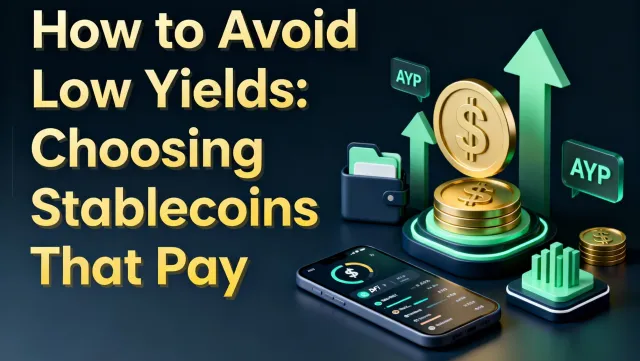
How to Avoid Low Yields: Choosing Stablecoins That Pay

Earning steady income from stablecoins is possible—but only if you choose assets and platforms that balance transparency, liquidity, and sustainable yield. The best approach begins with fiat-backed coins that are easy to redeem, then layering in vetted lending, DeFi, or yield-bearing options that fit your risk tolerance. This guide shows where to earn passive income with stablecoin investments, how to vet issuers and platforms, and what to monitor so your APY doesn’t evaporate. We’ll compare coins and strategies, highlight trusted stablecoin platforms, and provide a step-by-step path to test, diversify, and scale your allocation while minimizing avoidable risks. Understanding Stablecoins and Their Types A stablecoin is a digital asset designed to maintain a stable value—usually pegged to a fiat currency like the U.S. dollar—by holding collateral (cash, Treasuries, or crypto) or using algorithms that adjust supply. The goal is less volatility than typical cryptocurrencies and easier movement across networks. Fiat-collateralized stablecoins (e.g., USDC, USDT) are backed 1:1 by reserves like cash and short-term U.S. Treasuries, with redemptions at par through the issuer or partners, which supports payments and yield use cases, per industry overviews from Yellow Card and JPMorgan Private Bank. Crypto-collateralized stablecoins (e.g., DAI) are backed by other crypto assets and typically over-collateralized to absorb volatility. Algorithmic stablecoins (e.g., AMPL) aim to hold a peg via supply algorithms; history shows they can break during stress. Hybrid models (e.g., Frax) mix collateral and algorithmic mechanisms. Fiat-collateralized stablecoins dominate due to straightforward redemption and broad acceptance; JPMorgan Private Bank notes they hold the large majority of market share, reflecting their utility and regulatory momentum for payments and treasury-like use. Market concentration is also high: a handful of stablecoins account for the vast majority of circulating value, according to The Motley Fool’s analysis of stablecoin share. Key Criteria for Choosing Yield-Generating Stablecoins Reserve transparency and attestations: Prefer issuers that publish frequent, independent attestations and disclose detailed reserve composition (cash, T‑bills, repos). USDC is often cited for its regular disclosures and Treasury-heavy reserves in industry studies. Regulatory posture and licensing: Favor tokens and platforms under clear regulatory regimes that reinforce redeemability and capital standards. Stripe’s overview of stablecoin payments highlights evolving rules and the importance of par redemptions and compliance. Liquidity and redemption mechanics: Check on-chain liquidity, centralized exchange depth, and whether institutional redemption is accessible and timely at par. Platform security and counterparty risk: Centralized finance (CeFi) is simpler but adds custodial and platform risk; decentralized finance (DeFi) offers transparency but introduces smart contract and governance risk. Yield sustainability: Verify how APY is generated. Durable yields come from borrow demand, protocol revenue, or T‑bill passthroughs; short-lived token incentives are prone to drop-offs, as tracked in Galaxy Digital’s research on on-chain yield. Comparison of leading stablecoins (summary view): Step 1: Assess Your Investment Needs and Risk Tolerance Clarify how you’ll use stablecoins: immediate payments and float management require fast settlement and instant liquidity, while income-focused allocations can tolerate modest lockups or variable APYs. Define your minimum acceptable yield, how much capital you can lock and for how long, and your comfort with custody (CeFi) versus protocol (DeFi) risk. Create a checklist: Liquidity needs (T+0 withdrawals vs. lockups) Target APY range and acceptable variability Capital at risk and drawdown limits Custody preference (custodial vs. self-custody) Technical comfort with on-chain tools and monitoring Step 2: Evaluate Stablecoin Issuers for Transparency and Security Start with the asset itself. Review the issuer’s proof-of-reserves reports, audit/attestation frequency, and reserve composition. Coins with independently verified, high-quality reserves (cash, T‑bills, repos) and clear redemption policies tend to fare best under stress. McKinsey’s analysis of tokenized cash underscores why verifiable reserves and cash-like assets matter for resilience. Provable reserves are independently verified statements confirming all issued stablecoins are fully backed by equivalent cash or liquid assets. A cautionary note: Algorithmic designs have repeatedly broken in stress conditions; TerraUSD’s collapse wiped out tens of billions and remains a central case study in stablecoin risk, as covered by Nasdaq’s overview of stablecoin investing risks. Quick issuer vet checklist: Independent attestations (monthly/quarterly) and named auditor Detailed reserve breakdown and duration profile Par redemption mechanics and settlement timelines Jurisdiction, licensing, and regulatory disclosures Incident history and remediation transparency Step 3: Select the Right Yield Strategy for Your Portfolio Common ways to earn yield: CeFi lending: Exchange or lender programs with simple onboarding and predictable UX; typical ranges around 4–7% APY, depending on borrow demand and region, per the Eco guide to stablecoin lending platforms. DeFi protocols: On-chain money markets (e.g., Aave) with transparent reserves and variable APYs often in the 4–7% range in normal markets, as summarized by MyEtherWallet’s stablecoin yield guide. Yield-bearing stablecoins: Tokens that pass through T‑bill or protocol income (e.g., “USDS”-style instruments) and auto-accrue around mid-single-digit yields; Galaxy Digital notes these are linked to real-world rates and may fluctuate with policy cycles. RWA-backed lending: On-chain access to financing receivables or treasury-like assets; yields map to real-economy risk, fees, and seniority. Strategy comparison: Match higher yields with higher diligence: on-chain transparency can help you verify parameters, while CeFi simplicity comes with centralized counterparty exposure. Step 4: Test Investments with Small Deposits and Monitor Performance Pilot before you scale. Start with a small amount (e.g., $100) to confirm deposits, accrual, and withdrawals. StablecoinInsider’s walkthroughs emphasize verifying redemption flows and timelines before committing larger balances. A simple test loop: Deposit and note fees/time, Track daily/weekly APY, Request partial withdrawal, Confirm final payout timing/fees, Document support responsiveness and any hiccups. Keep a log so you can compare platforms apples-to-apples. Step 5: Diversify Across Stablecoins and Platforms to Mitigate Risks Avoid single points of failure. Split funds across multiple fiat-backed coins (e.g., USDC, USDT) and at least one crypto-collateralized option (e.g., DAI), and diversify delivery (some CeFi, some DeFi). Trust Wallet’s guide to earning with stablecoins reinforces diversification to limit depeg, counterparty, or smart contract events. Practical guardrails: Cap exposure to any one issuer or platform at ~40% Spread across chains and venues to improve exit options Stagger maturities/lockups to maintain liquidity Example allocations: Conservative: 40% USDC (CeFi), 30% USDC (Aave), 30% yield-bearing stablecoin Balanced: 30% USDC (CeFi), 30% USDT (DeFi), 20% DAI (DeFi), 20% RWA pool Opportunistic: 25% USDC (DeFi), 25% USDT (CeFi), 25% yield-bearing, 25% RWA pool Step 6: Continuously Monitor Stablecoin and Platform Health Set a cadence: review yields weekly, platform health monthly, and security settings at least quarterly. On-chain analytics and issuer reports help you spot drift in reserves, utilization, and risk. For transaction monitoring and wallet hygiene, tools from Chainalysis and TRM Labs offer real-time screening and alerting. Track regulatory updates and issuer attestations—rules continue to evolve for redemptions and capital standards, as summarized in Stripe’s stablecoin payments note. Good habits here protect long-term yield stability as market, rate, and policy regimes change. Practical Platforms and Tools for Earning Stablecoin Yields Where to earn passive income with stablecoin investments today: CeFi platforms: Kraken (around mid-single-digit APY on select assets in supported regions), Nexo (headline rates up to the low teens with tiers/requirements), and Coinbase for simple onboarding. See CryptoManiaks’ roundup for current yield snapshots and requirements. DeFi protocols: Aave typically offers variable APYs in the mid-single digits with no lockups; platform dashboards and explorers provide live utilization and rate data. Plasma Finance’s overview of earning interest in stablecoins explains how to compare pools. Yield-bearing stablecoins: Instruments that pass through T‑bill or protocol income (e.g., “USDS”-style tokens) often yield around 5% with minimal manual management; issuers publish terms and custody details. RWA and advanced options: Tokenized credit and invoice financing platforms (e.g., Huma Finance–style pools) bring real-world cash flows on-chain; yields vary by underwriting and seniority. Platform snapshot: To keep decisions data-driven, consider using ToVest analytics to track yields, platform health, and diversification in one place. Frequently Asked Questions What regulations impact stablecoin yields and how can investors navigate them? Many regions require full reserve backing and restrict issuers from paying direct interest; investors can still earn via regulated lending programs or compliant DeFi pools that route yield from borrow demand or real-world assets. Which stablecoins and platforms currently offer the most reliable yields? USDC and USDT are the most widely integrated, with deep liquidity and broad platform support; for yield, established venues like Nexo, Kraken, and Aave are common starting points, though terms and risks vary. How can I minimize risks like depegging and low returns with stablecoins? Favor coins with frequent independent attestations, clear redemption, and strong compliance; diversify across coins and platforms and verify that APY comes from durable sources, not short-lived incentives. What are the common risks when chasing stablecoin yields? Key risks include counterparty failure, smart contract exploits, regulatory shifts, liquidity shortfalls, and depegs—especially in stressed markets—so avoid over-concentration and keep monitoring. Are yield-bearing stablecoins safe for long-term investment? They can be efficient for income, but safety depends on reserve quality, issuer transparency, and custody; treat them as income tools you actively monitor rather than set-and-forget holdings.

blog banner
Academy - ブログ | ToVest