December 18, 2025
Global Stock Investing in 2025: What Every Beginner Must Know
Global stock investing lets you own companies beyond your home market through individual international stocks or global stock funds. If you’re asking “how do I start global stock investing from my country,” the path is simpler than you think: open a brokerage that offers global market access, set a target allocation to international stocks, start with broad, low-cost funds (or ADRs), automate contributions, and review periodically. Most beginners can begin with a standard brokerage that lists international ETFs and mutual funds, then add direct foreign listings as confidence grows. Alongside traditional routes, modern platforms now offer tokenized assets to reach markets that were previously out of reach. This guide walks you through the why, what, and how—so you can take action with clarity in 2025.
Understanding Global Stock Investing
Global stock investing means buying stocks or stock funds from companies outside your home country, giving you exposure to international markets and diversification. It differs from a purely domestic approach by spreading your equity exposure across regions and currencies, which can dampen portfolio swings and broaden your opportunity set. In practice, that diversification often comes from owning a mix of developed (e.g., Europe, Japan) and emerging markets (e.g., India, Brazil), each with distinct sector makeups, currency regimes, and policy frameworks. Investors typically access these markets via market-cap-weighted indexes, though factor-tilted and equal-weight strategies can alter risk/return characteristics.
What’s the difference between global, international, and emerging-market funds?
Global funds hold both domestic and foreign stocks.
International funds exclude your home market (e.g., for U.S. investors, “international” means non-U.S. only).
Emerging-market funds focus on developing economies with higher growth potential and higher risk.
Other useful terms:
International stocks are shares of companies listed outside your home country.
Global stock funds are mutual funds or ETFs that invest across multiple countries.
American depositary receipts (ADRs) are U.S.-traded certificates representing shares of foreign companies, simplifying access without trading overseas; see this concise overview of ADRs from Wikipedia.
Global depositary receipts (GDRs) and other depository structures also exist, enabling trading on non-U.S. venues; mechanics are similar to ADRs but venue and currency may differ.
Developed, emerging, and frontier markets are classifications used by index providers based on income levels, market accessibility, and liquidity; these labels influence which stocks an ETF can hold and the fund’s risk profile.
Fund type snapshot:
For basics on the mechanics and vehicles, see Investor.gov’s guide to international investing and Schwab’s overview of international stocks. As you progress, compare index methodologies (e.g., MSCI vs. FTSE) and observe how differences in sector weights or country inclusion can lead to tracking differences over time.
Why Invest in Global Stocks?
Diversification is the main reason. International markets don’t move in lockstep with your home market; adding them can reduce volatility and improve long-run outcomes, as explained by Vanguard’s perspective on why invest internationally. Diversification arises from differences in sector composition (e.g., Europe’s higher weight to financials/industrials versus the U.S.’s larger tech exposure), policy cycles, and currencies. Historically, correlations between regions rise during crises but tend to normalize in expansions, allowing international exposure to cushion portfolio swings over full cycles.
Valuations also matter. Entering 2025, non-U.S. equities traded at notably lower price-to-earnings multiples—roughly 35% cheaper than U.S. peers—and many overseas markets posted strong returns, according to Fidelity’s 2025 international stocks outlook. Beyond P/E, investors often compare dividend yields, price-to-book, and cyclically adjusted P/E to gauge relative attractiveness. Currency can amplify or dampen these valuation effects; for instance, a depreciating foreign currency can make overseas earnings cheaper in home-currency terms, while an appreciating currency can boost translated returns.
Sector leadership rotates over cycles. In the 2025 horizon, 61% of global investors cited technology as the top sector for the next three years, per PwC’s Global Investor Survey, while cyclical and value areas have also rebounded at different points in the cycle. Together, shifting sector and regional leadership, changing monetary policy paths, and evolving supply chains argue for a diversified global allocation rather than a home-market-only approach. This is especially relevant for investors with home bias—a common tendency to overweight domestic stocks—who may miss opportunities in regions entering favorable phases of the cycle.
Preparing to Start Your Global Stock Portfolio
Start with preparation before you place a trade:
Learn the market mechanics: trading hours, time zones, settlement, and currency. Many markets operate on T+2 settlement (with some moving to T+1), and corporate actions (dividends, rights issues) may follow different calendars and election processes.
Define goals and time horizon: long-term growth, retirement, or specific milestones. A longer horizon can accommodate the higher volatility typical of emerging markets.
Assess risk tolerance: international investing adds currency and policy risks. Consider how a 10%–20% drawdown in international holdings—potentially larger in EM—fits your comfort level and plan.
Decide your allocation: many investors keep 15%–40% of equities in international stocks, varying by age, risk profile, and goals. Align this with your overall stock/bond mix.
Tax and documentation: know the forms and rules (e.g., W-8BEN equivalents for withholding tax rate reductions, relief-at-source vs. reclaim processes, and local filing obligations). Understand how foreign tax credits may work in your jurisdiction.
Easy entry points include broad-based international mutual funds and ETFs that track developed and emerging markets, plus ADRs for single-company exposure. Tokenized assets can complement these by enabling fractional access to real-world and cross-border opportunities.
A simple step-by-step flow:
Choose a broker with global access and low fees.
Set your international allocation target and rebalancing rules.
Pick core global or international funds; add regional or thematic tilts selectively.
Invest consistently (e.g., monthly contributions).
Review and rebalance on a set schedule.
Add practical layers to the flow:
Funding and FX: if your broker offers multi-currency subaccounts, convert when FX spreads are tight; monitor conversion fees and use limit orders for large conversions.
Instrument selection: compare expense ratios, index methodology, liquidity (bid–ask spreads, average volume), and tracking difference versus benchmark.
Execution: for thinly traded international ETFs or ADRs, use limit orders and avoid market-on-open in volatile sessions.
For practical how-tos on routes to buy foreign shares—ADRs, global ETFs, or direct listings—see Investopedia’s guide to trading foreign stocks.
Choosing the Right Brokerage for Global Trading
Look for:
Market access: developed and emerging exchanges, ADR availability, and international ETFs.
Costs: trading fees, FX spreads, custody/ADR fees, and withholding taxes on dividends.
Product shelf: international brokerage account support for ETFs, mutual funds, ADRs, and direct foreign shares.
Platforms and tools: research, screeners, currency tools, and tax reporting for cross-border holdings.
Security: two-factor authentication, SIPC/insurer coverage where relevant, and robust cybersecurity.
Many beginners only need a standard brokerage because many online brokers let you buy international ETFs and mutual funds directly, and some also allow trading on foreign exchanges (see NerdWallet’s primer on foreign/international stocks).
Brokerage account: an investment account that lets you buy and sell stocks, funds, and other securities.
Tip: If direct foreign trading is unavailable in your country, use global ETFs and ADRs, or consider a regional broker with cross-border access supported by clear KYC/AML and tax documentation.
Additional considerations to differentiate brokers:
FX handling: do you get spot rates, or are markups embedded? Are there separate FX commissions? Is auto-FX enabled when you trade foreign listings?
Account base currency: a multi-currency account can reduce repeated conversions on dividends and sales proceeds.
Corporate actions and proxy: how does the broker handle foreign corporate actions, voting rights, and optional dividends (scrip vs. cash)?
Fractional and DR eligibility: not all brokers support fractional ADRs or reinvestment plans for foreign dividends.
Tax reporting: confirm availability of consolidated tax statements and support for foreign tax credit reporting in your jurisdiction.
Strategies for Diversifying Your Global Investments
Portfolio diversification means spreading your investments across sectors and countries to reduce the impact of underperformance in any one area. In 2025, research expects more balanced performance between value and growth styles, supporting diversified portfolio design (Edward Jones Annual Market Outlook). A core-satellite framework can keep costs low and maintain broad exposure while letting you express views in smaller “satellites.”
Sample global equity sleeve (illustrative, adjust to your needs):
40% U.S. core (blend of growth/value)
25% Developed ex-U.S. (Europe, Japan)
20% Emerging markets (broad EM)
10% Global tech/thematics (AI, cloud)
5% Income tilt (Europe/Japan dividend strategies)
How to blend exposures:
Sectors: mix technology leaders with cyclicals and defensives; balance growth and value.
Regions: maintain exposure to the U.S., Europe, Asia, and a measured EM sleeve.
Styles and factors: consider small-cap and quality tilts to diversify large-cap concentration; monitor factor overlap to avoid unintended bets.
Rebalancing method: use calendar-based (e.g., semiannual) or threshold-based bands (e.g., ±5% of target weights) to control drift and trading costs.
Examples to watch in 2025:
Technology leadership across the U.S. and Asia.
Emerging markets supported by China’s stabilization and India’s reform momentum; India’s Goods and Services Tax (GST) has underpinned formalization and efficiency gains (Goldman Sachs Asset Management Market Know-How).
Durable dividend cultures in Europe and Japan, useful for income-oriented investors (Goldman Sachs Asset Management).
Implementation insight: broad international funds tracking major indexes can serve as the core, while satellites might target specific regions (e.g., Asia ex-Japan), factors (quality, value), or themes (AI infrastructure). Keep total expense ratios in check to preserve net returns.
Key Investment Themes Shaping 2025 Global Markets
Technology outperformance—powered by AI and cloud—remains a central theme, while sustainability-linked investments and a rebound in cyclical and value stocks are part of the broader mosaic (J.P. Morgan’s review of 2025 TMT themes). At the same time, deglobalization, selective protectionism, and shifting tariffs are reshaping supply chains and relative winners (Goldman Sachs Asset Management). Investors should also consider how differing inflation and interest-rate paths across regions can affect relative equity performance and currency trends.
Region-specific highlights for 2025:
Definitions:
Cyclical stocks: companies whose profits rise and fall with the economic cycle (e.g., industrials, consumer discretionary).
Value investments: stocks trading below estimates of intrinsic value, often with lower valuation multiples.
AI infrastructure: the hardware, software, and data-center ecosystems that enable AI model training and deployment.
Theme integration tips:
Link themes to vehicles: for AI, consider diversified tech funds rather than narrow single-industry bets; for energy transition, balance pure-play renewables with enabling industries (grid, semiconductors).
Watch currency channels: rate differentials can influence currencies (e.g., yen sensitivity to BOJ policy), affecting unhedged returns.
Stress-test scenarios: map how tariffs, supply-chain shifts, or policy tightening could affect sector earnings and valuation multiples.
Risks and Challenges in Global Stock Investing
What can go wrong:
Market volatility: the speed and magnitude of price moves; in global markets, shocks can propagate across regions quickly.
Currency risk: returns can be boosted or reduced when foreign-currency assets are translated back into your home currency.
Political/regulatory risk: elections, policy changes, capital controls, or tariffs can alter company prospects and capital flows.
Liquidity and market structure: some markets have wider spreads, shorter trading windows, or circuit breakers.
Costs and taxes: FX spreads, ADR fees, and foreign withholding taxes can reduce net returns.
“Recent geopolitical shifts have reversed tariff declines, prompting protectionist policies and supply chain reshoring,” notes Goldman Sachs Asset Management. Technology-related cyber risks and disruption are also top-of-mind for investors in 2025, according to PwC’s Global Investor Survey.
Risk checklist:
Currency swings: consider whether to use hedged or unhedged funds. Hedging can reduce volatility but comes with costs and may mute potential currency gains; investors often mix both to balance outcomes across cycles.
Concentration risk: avoid over-allocating to a single country or sector. Review top holdings and country weights to ensure intended exposure.
Policy risk: monitor central bank paths (e.g., U.S., Japan) and trade measures. For ADRs, be aware of listing standards and the (small) possibility of delistings if compliance lapses occur.
Liquidity: use broad ETFs or large-cap ADRs when accessing thinner markets. Check average daily volume and bid–ask spreads before placing orders.
Compliance: ensure correct tax forms (e.g., W-8BEN equivalents) and local regulations. Understand dividend withholding rates and whether your broker provides relief at source.
For a plain-English overview of international risks and costs, see Investor.gov’s international investing guide. Also note that accounting standards and disclosure practices can vary by market, influencing comparability and due diligence.
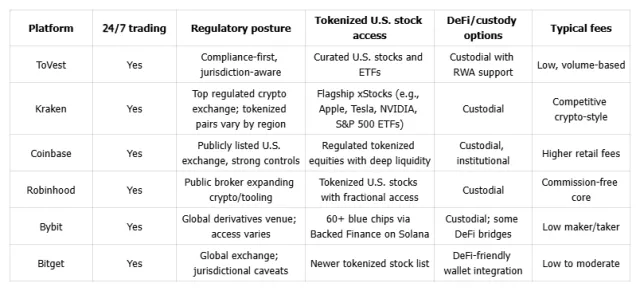
Using Tokenized Assets and Innovative Platforms like ToVest
Tokenized assets are digital representations of real-world assets on a blockchain, enabling fractional ownership, programmability, and potentially greater liquidity and transparency. Platforms like ToVest utilize secure, low-latency infrastructure and real-time analytics to help investors access diversified real-world and tokenized portfolios—such as baskets of international equities or alternative assets—alongside traditional ETFs and ADRs.
How this fits your allocation:
Core: pair a global index fund with a rules-based, tokenized global sleeve for 24/7 risk management and fractional rebalancing.
Satellite: use tokenized assets to reach niche or illiquid exposures (e.g., private credit, real estate) or to fine-tune regional tilts.
Operational edge: lightning-fast execution, robust security protocols, and portfolio dashboards can complement a standard broker’s toolkit. Explore practical education via the ToVest Academy.
Due diligence pointers for tokenized exposure:
Structure and custody: understand the legal claim the token confers, the custody arrangement for the underlying asset, and redemption mechanics.
Pricing and oracles: review how prices are sourced and how frequently net-asset values are updated on-chain.
Regulatory considerations: confirm jurisdictional compliance, especially for cross-border investors, and review disclosures on risks, fees, and smart-contract audits.
Monitoring and Adjusting Your Global Portfolio
Set a cadence. Most long-term investors review once or twice a year or when allocations drift beyond thresholds (e.g., ±5 percentage points). Use data-driven dashboards to track regional performance, FX impacts, and sector rotations; platforms like ToVest surface real-time indicators to inform timely, rules-based rebalancing.
Simple rebalancing checklist:
Compare current weights vs. targets (U.S., developed ex-home, EM, sectors).
Trim outperformers; add to laggards to restore targets.
Check FX exposure and decide on hedged vs. unhedged fund mix.
Reassess policy and earnings outlooks; adjust tilts modestly, not wholesale.
Confirm tax implications and trading costs before executing.
Add monitoring depth:
Tracking difference: compare fund returns to their benchmarks to assess implementation quality.
Look-through analysis: examine sector, factor, and country weights across all holdings to avoid unintended overlaps.
Risk metrics: monitor volatility and drawdowns of the international sleeve and the combined portfolio; confirm that exposures still fit your risk tolerance.
Tax management: consider tax-loss harvesting windows and dividend calendars across regions to optimize after-tax returns where applicable.
Flexibility is crucial during volatility or regulatory changes; adjust gradually and keep the core diversified.
Frequently Asked Questions
What is the easiest way for a beginner to buy global stocks?
The simplest method is to buy international mutual funds or ETFs through a brokerage, which provide instant diversification without picking individual foreign stocks. Many investors start with a broad developed ex-home fund and add emerging markets exposure; as comfort grows, they may complement with ADRs or regional funds for targeted tilts.
How much of my portfolio should be invested internationally?
A common guideline is 15%–40% of your stock allocation, scaled to your age, goals, and risk tolerance. Consider your income and spending currency: if you expect future expenses in your home currency, you may prefer some hedged exposure to reduce currency volatility.
What are the main risks of global stock investing?
Key risks include currency fluctuations, political and regulatory shifts, liquidity differences, unfamiliar reporting standards, and sometimes higher trading costs. Implementation risk—such as wider bid–ask spreads, higher expense ratios, or tracking error—can also affect realized returns.
Should I hedge currency risk in my international investments?
Hedging can reduce exchange-rate volatility, but many long-term investors use unhedged global index funds and accept currency movement as part of diversification. A blended approach (e.g., partial hedging of developed-markets exposure while leaving EM unhedged) can balance volatility control with diversification benefits.
How much money do I need to start global stock investing?
You can start with the price of a single ETF share, and many platforms, including ToVest, offer fractional shares, keeping the minimum low. Automating contributions (e.g., monthly dollar-cost averaging) helps build exposure steadily and mitigate timing risk.